Projects
Following our vision and long-term objectives, we participate in various projects for children and staff within individual groups. We collaborate with parents, experts and other institutions both within and outside our environment.
Erasmus+ Accredited Mobility Project 2025/2026
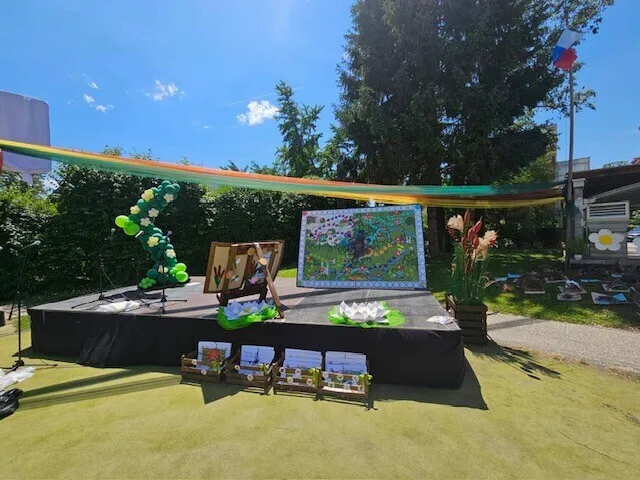
In the 2025/26 school year, Trinka the beaver joined our kindergarten community. Together with her, we set off on a new journey of discovery. Just as Trinka followed pieces of a map on her way to find her friends, we too followed new ideas, knowledge and inspiration through our Erasmus+ project.
During our visits to kindergartens across Europe, we explored different pedagogical approaches, built new partnerships and brought the knowledge and insights we gained back into our everyday practice.
We invite you to take a peek at the story of our journeys of discovery.
Erasmus+ Accredited Mobility Project 2024/2025
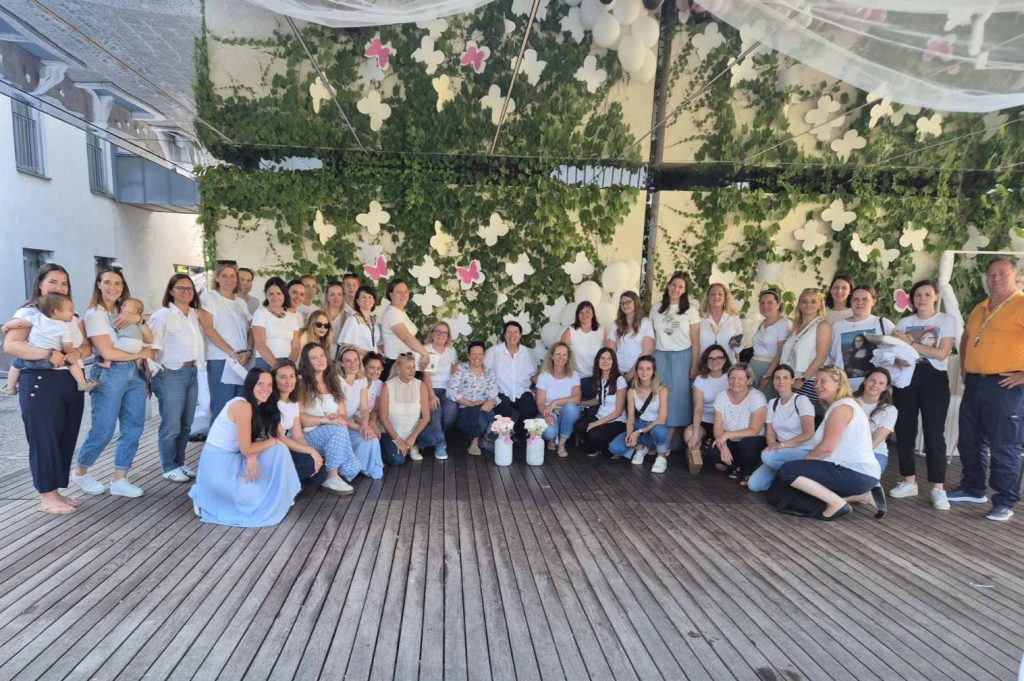
As part of our Erasmus+ staff mobility project, we explored the importance of interpersonal relationships, living and learning together, and building connections with partners both at home and abroad. Together with the children, we explored ways of fostering understanding, acceptance and cooperation, while discovering how small and everyday moments can leave a lasting mark on our lives.
Throughout the project, we learned from the good practices of our partner kindergartens, formed new friendships and created special moments together, filled with play, music and joy. The experiences and insights we gained enrich our curriculum in practice, encouraging us to reflect on our work and to explore new ways of fostering a high-quality, meaningful life within our community.
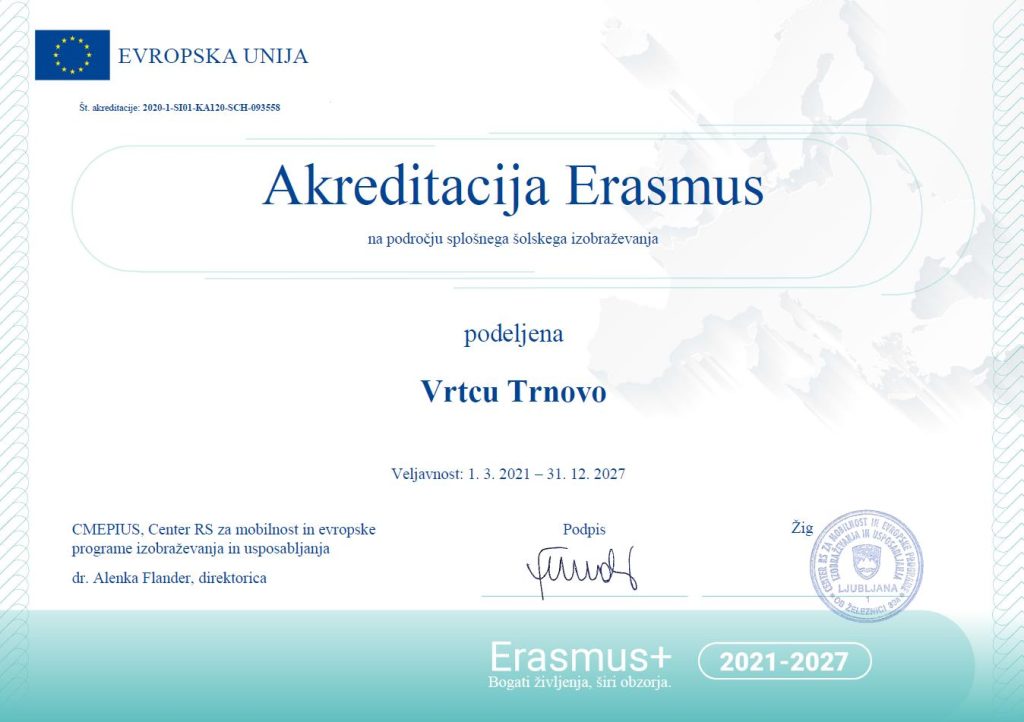
Erasmus Accreditation
Trnovo Kindergarten has developed high-quality content and organizational development plan, resulting in our receipt of Erasmus Accreditation. This accreditation allows us to offer rapid, high-quality, and effective learning mobilities and exchanges to other institutions across Europe. The plan facilitates the implementation of activities that will profoundly impact the personal and professional development of our staff, as well as contribute to the overall development of the kindergarten.

QUEST – Quality Exchange between Skilled Teachers
During school years 2019/20, 2020/21, and 2021/22 we successfully carried out a European project titled QUEST in partnership with two organizations: Ecole Maternelle Françoise Dolto, a French kindergarten, and 2nd Nipiagogeio of Afandou, a Greek kindergarten. This international cooperation was part of the Erasmus+ KA2 program, focusing on strategic partnerships for educational exchanges.
The goal of the project was to enhance the existing educational programme by infusing it with a multicultural and multilingual dimension. We achieved this by sharing our established methodology, Project Work with a Puppet, with our French and Greek partners. A literary-didactical story served as the centrepiece of the project, initiating action on the pedagogical stage.
Throughout the duration of the project, we conducted seven in-person and two virtual teachings, and learning activities, engaging 26 educators from across the participating countries. Children played an active role, collaborating and exchanging ideas with their peers from France and Greece. They took centre stage in exploring diverse materials and content, understanding various cultures, familiarizing themselves with foreign languages, and mutually learning from one another.
By sharing best practices and promoting the methodology of Project Work with a Puppet alongside the Pedagogical Puppeteer program, we enriched the kindergarten curriculum, celebrated cultural diversity through language acquisition, and shared our newfound knowledge with a broader audience.
The educational journey proved inspiring for all participants. Collaborating with educators and children from Greek and French kindergartens revealed a profound insight: Love serves as the fundamental principle of self-development, fostering attraction and collaboration driven by desire, akin to a magnetic force. Furthermore, the presence of the puppet continues to evoke special feelings and emotions in all involved.
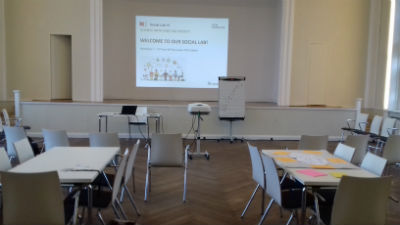
Collaboration in NewHoRRIzon project
Europe aims to strengthen the connections between science, society and technology to better align innovation systems with the needs and values of European society. NewHoRRIzon, in which we were participating as part of a Pilot Action, seeks to integrate Responsible Research and Innovation (RRI) into research and innovation systems at both national and international level.
The concept of RRI intends to bridge gaps between science, research and innovation communities and society at large by fostering more inclusive, anticipatory, open and responsive research and innovation systems. RRI encompasses several key dimensions, including gender, open access, science education, public engagement, governance and ethics. According to European Commission RRI “implies that societal actors (researchers, citizens, policy makers, business, third sector organisations, etc.) work together throughout the entire research and innovation process to better align both the process and its outcomes with the values, needs and expectations of society”.
A key element of the NewHoRRIzon project is the Social Labs, each focusing on a different theme of Horizon 2020. Trnovo Kindergarten is actively involved in the Social Lab 15 – Science with and for Society, participating in Pilot Action 2 “RRI education”. Through these activities, we pursued RRI concepts and created open learning environment to encourage open science among the youngest learners.
Erasmus+: “Pedagogical Puppeteer”
In July 2018, we began to implement the project »Pedagogical Puppeteer«, funded by the Erasmus+ programme. The project’s goal is to enhance our innovative practices and share these advancements with other interested groups. Building on extensive research and our experience with the Project Work with a Puppet, we aim to introduce a new vocational profile – the Pedagogical Puppeteer.
This two-year project involved all educators at Trnovo kindergarten, both directly and indirectly. They developed the competencies need to effectively carry out daily activities. The educators impoved their animation techniques, learned more about creative drama and acquired storytelling skills. As a result, they became inventive educators, proficient in implementing and disseminating this innovation. Furthermore, they got equipped to present it to an international audience and share it with other interested groups through training.
The experience and knowledge gained enhanced the educators’ key competencies for professional and effective class performance. The trained staff reinforced the open learning environment at our kindergarten, where we strive to encourage lifelong learning, seek international cooperation and promote creativity and innovation.
International Partnerships
The Erasmus+ program supports various activities that promote international cooperation and exchange. In this spirit, we collaborate with the French high school Maison Familiale Rurale du Pays de Montbéliard, serving as a host organization for their students.
Beyonf European programs, we also collaborate with the Confucius Institute of Ljubljana and with the 17th Kindergarten in China (Chengdu). These partnerships have fostered friendly relationships and created opportunities for staff exchanges.
We are delighted to welcome national and international guests, who are consistently impressed by our program and the diverse activities and materials our educators use in their classes.
Erasmus+: “Open Learning Environment – Learning From Each Other”
At Trnovo Kindergarten, we foster a positive atmosphere and an open learning environment, continually enhanced by the ongoing education of our staff. Through a two-year project titled “Open Learning Environment – Learning From Each Other” within the Erasmus+ program, Mobility of Staff, 15 educators gained invaluable experience by learning abroad and exchanging with others. This opportunity allowed participants to grow both personally and professionally, positioning Trnovo Kindergarten on the map of innovative and open learning environments. The mobility project enabled us to establish new relationships with European educational institution and to expand our knowledge, which is essential for planning new literary-didactical stories.